Why Active Recall Works: Quizzes & Flashcards Beat Rereading
Active recall stands as the most effective study technique, strongly supported by cognitive science. Discover why quizzes and flashcards surpass rereading—and learn strategies to make active recall a consistent habit.
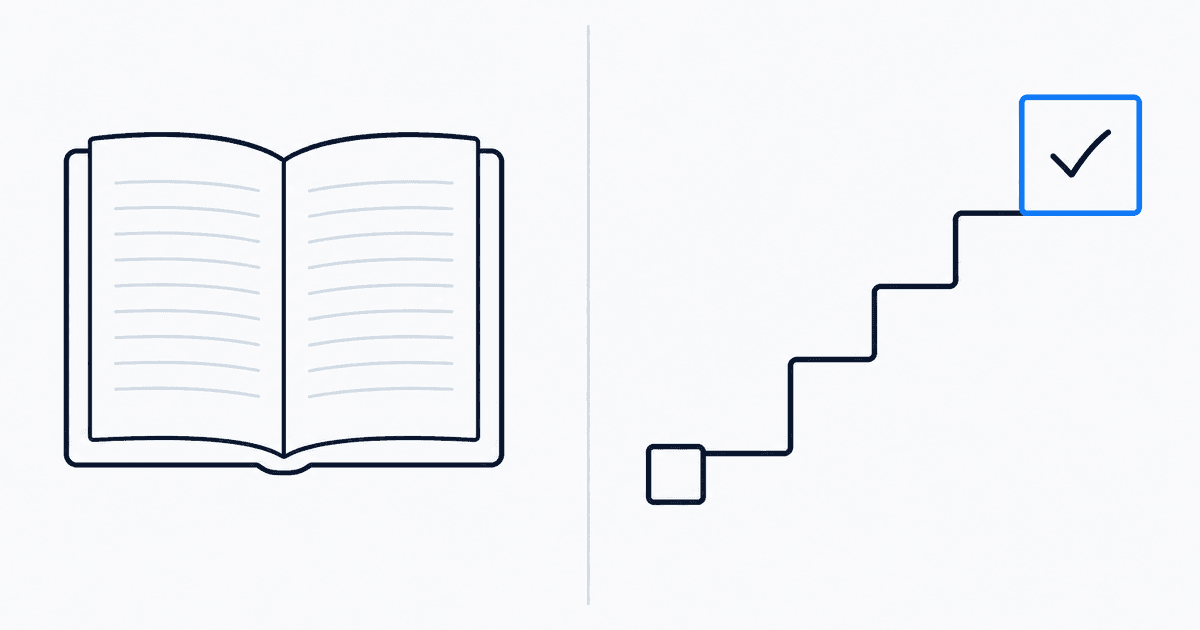
Rereading often gives a deceptive sense of productivity. As you skim through pages, the text appears familiar, and your anxiety diminishes because the material no longer seems alien. However, fluency on the page is not the same as mastery under exam conditions. Instructors challenge you to explain, compute, compare, and justify—often with unfamiliar phrasing or under time constraints.
Cognitive science identifies a crucial practice: retrieval. Retrieval involves generating an answer from memory (or partially from memory) rather than passively absorbing text. Tools like flashcards serve as powerful retrieval engines. So do closed-book summaries, practice exams, and even explaining concepts to an empty chair. The core mechanism remains consistent: actively reconstructing information strengthens the neural pathways you'll need during exams.
Spacing complements retrieval. Engaging in intense practice once and never revisiting leads to rapid forgetting. Returning to practice days later—after some forgetting has occurred—demands more effortful reconstruction, resulting in more durable memory retention. Effective study systems integrate retrieval with spacing, while mediocre ones rely on highlighting and misplaced optimism.
Where quizzes punch above their weight
Quizzes introduce an element of consequence. While a flashcard might feel binary (right/wrong) without context, a well-crafted multiple-choice question tests your understanding of why incorrect answers are tempting—this is crucial in distinguishing superficial recognition from genuine comprehension. This distinction is vital in STEM subjects (“which assumption breaks this model?”) and humanities (“which interpretation does the passage not support?”).
The challenge lies in question creation. Crafting quality questions is time-consuming, which is why students often default to rereading: it's easier to consume than to construct exams for oneself.
How Studeum lowers the cost of good practice
Studeum doesn't replace your judgment regarding course priorities—your syllabus, instructor emphasis, and personal goals still lead. What Studeum changes is the friction between having readings and engaging in retrieval sessions based on them:
- Quiz items grounded in your material minimize the risk of practicing irrelevant trivia that won't appear on your exam.
- Flashcards generated from your uploads save hours of transcription and ensure terminology remains consistent with your sources.
- A study guide offers direction when you feel lost, preventing you from abandoning quizzes simply because a chapter seemed overwhelming.
These features aren't substitutes for sleep, exercise, or a sensible weekly plan. They increase the likelihood that you'll engage in the kind of practice that exams reward.
A small experiment worth trying
Select a chapter you believe you “know.” Create a quiz, attempt it sincerely, and carefully review explanations for items you missed—even those you nearly got right. Then, generate a shorter second quiz (or a focused flashcard set) targeting only the weak areas. Compare this session to rereading the same chapter for the same duration. Most students notice a difference within a week: missed quiz items become a roadmap, not a setback.
Illusions of knowing and interleaving
Two pitfalls often trap even the most motivated students. First, familiarity: you underline a sentence until it seems “obvious,” yet you fail to recall it under stress because recognition in context is easier than production without cues. Second, blocked practice: you master one problem type on Monday and don't revisit it until the final exam, even though exams mix problem types. Interleaving—rotating topics within a session—feels more challenging in the moment but often leads to better knowledge transfer. Use quizzes to enforce this mixture instead of relying on your brain to randomize fairly.
While sleep and nutrition aren't study apps, they are foundational to everything retrieval depends on: attention, emotional regulation, and overnight consolidation. If you're pulling all-nighters, no flashcard algorithm can fully compensate.
Closing thought
If you're going to change just one habit this semester, make it this: less rereading, more retrieval. Tools are optional; the principle is not. If you're seeking a tool that aligns retrieval with the files you already have, start with Studeum using a particularly challenging reading and build from there.
Teaching others as the ultimate quiz
Explaining a concept to a friend involves retrieval with social stakes. If you can't articulate the idea clearly aloud, your quiz scores might be inflated by pattern recognition. Rotate formats: some days use multiple-choice questions, other days write short explanations, and sometimes record voice memos. The brain generalizes better when practice varies—exactly what fragile “I know this when I see it” feelings avoid.
Institutional realism
Different courses reward different approaches; some prioritize speed, while others value depth. Tailor your retrieval depth to the rubric you actually face. There's no advantage in perfect flashcards for chapters the syllabus considers optional.
Momentum on bad days
Not every study session will feel enlightening. On days when motivation is low, lower the bar but never drop it entirely: attempting five retrieval items honestly is better than a “rest day” that extends into a lost week. Treat motivation as unreliable weather; treat minimum viable practice as infrastructure. Over a semester, these minimum days impact your performance more than the occasional heroic study nights.