Effective Memory Techniques for Students' Success
Unlock your academic potential with effective memory techniques for studying. Discover strategies to retain information, enhance recall, and boost performance.

Memory techniques are essential for students aiming for success. They help in retaining and recalling information effectively.
Understanding how to study and memorize can transform your learning experience. It makes studying more efficient and less stressful.
Good memorization techniques are not just about rote learning. They involve strategies that engage your brain actively.
From visualization to mnemonic devices, there are many memorization methods to explore. Each technique offers unique benefits for different learning styles.
This article will guide you through effective memory techniques for studying. Discover how to retain information while studying and boost your academic performance.
Why Memory Matters in Studying
Memory plays a crucial role in education. It allows students to store and retrieve information when needed. Without effective memory, learning new material becomes a struggle.
Being able to recall information improves test performance. It also boosts confidence, which enhances overall learning. Knowledge retention is key to academic success and lifelong learning.
To maximize learning, it's important to understand how to retain information while studying. This involves identifying personal learning styles. Employing various strategies can aid in this process.
- Improved recall leads to higher grades.
- Better memory reduces study time and effort.
- Retention strengthens understanding of complex concepts.

Good study techniques for memorization enhance not only academic achievements but also future career prospects.
Understanding How Memory Works
Memory involves complex brain processes. It encodes, stores, and retrieves information. Understanding these processes can significantly aid learning efficiency.
There are three key memory stages: sensory, short-term, and long-term. Sensory memory briefly holds information from the senses. Short-term memory stores information temporarily. Long-term memory keeps it for extended periods.
Several factors affect these stages. Attention span, emotional connection, and relevance play major roles. Learning how to improve these areas can boost retention.
- Sensory memory captures initial data quickly.
- Short-term memory retains chunks temporarily.
- Long-term memory depends on depth of processing.
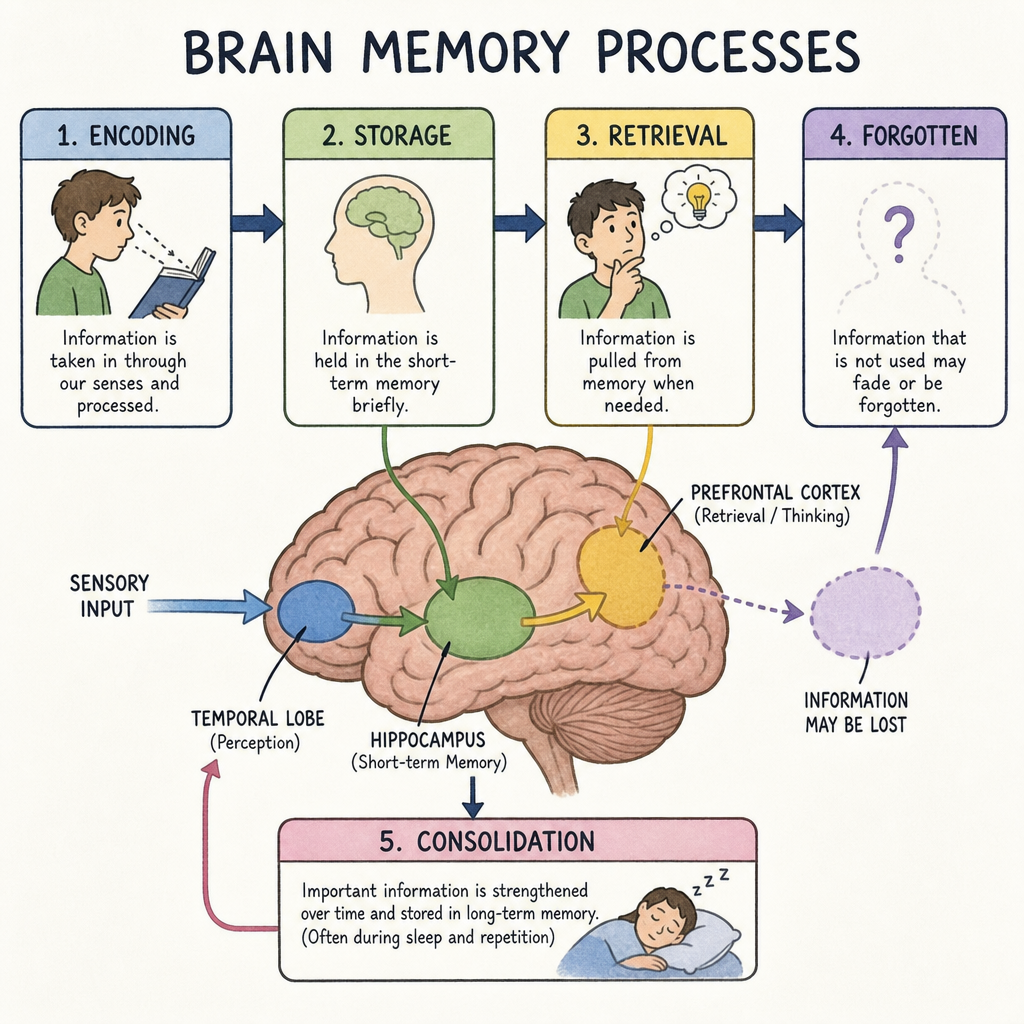
Recognizing these stages and their roles helps in choosing effective memory strategies. Improved understanding of memory functions lays the groundwork for using advanced memorization methods efficiently.
Foundational Principles of Good Memorization
Effective memorization begins with a strong understanding of the material. Grasping the core concepts before committing details to memory enhances retention. This foundational comprehension makes it easier to recall information when needed.
Active engagement is crucial in memorization. Passively reading or listening is less effective. Active involvement, like summarizing in your own words or teaching others, engrains information more deeply.
Several key principles can guide good memorization practices. They offer a framework for enhancing memory retention and recall abilities.
- Understand the material thoroughly.
- Engage actively with the content.
- Practice regular review sessions.
Review sessions consolidate knowledge and improve long-term retention. Revisiting material periodically prevents forgetting. This regular reinforcement strengthens memory pathways.
By incorporating these principles into study routines, students can achieve better results. Understanding and applying these foundational elements is essential for any advanced memory technique to work effectively.
Top Memory Techniques for Studying
Memory techniques can significantly enhance studying by improving retention and recall. Among the most effective are visualization and association, which transform abstract concepts into vivid images. The Method of Loci uses spatial memory by linking information to familiar places.
Chunking breaks down complex information into manageable parts. This simplification aids in memorizing large amounts of data. Mnemonic devices and acronyms are helpful memory aids that simplify retrieval by associating new information with familiar words or images.
Spaced repetition and active recall are practices that reinforce long-term memory retention. They rely on revisiting information over time and actively retrieving knowledge to strengthen neural connections.
- Visualization and association
- Method of Loci
- Chunking
- Mnemonic devices and acronyms
- Spaced repetition
Each of these strategies offers unique benefits and can be tailored to individual learning styles. Combining several techniques often yields the best results.

by Vlad Deep (https://unsplash.com/@vladdeep)
Visualization and Association
Visualization and association create mental images that link new information with what you already know. This enhances memorability and makes abstract concepts more tangible. Associating facts or ideas with vivid images helps you recall information quickly.
- Convert concepts into mental images.
- Relate unfamiliar information to known concepts.
- Use sensory details to enhance imagery.
These techniques tap into your brain's natural ability to remember visually-rich and meaningful experiences. Connecting the material to your interests also strengthens memory retention.

by Hal Gatewood (https://unsplash.com/@halacious)
The Method of Loci (Memory Palace)
The Method of Loci involves imagining a familiar route and placing pieces of information at various locations. Recalling these items involves mentally "walking" through your memory palace. This ties memory to physical space and enhances recall.
- Visualize a familiar location.
- Assign information to specific spots.
- Revisit your memory journey for practice.
This ancient technique is particularly useful for sequential information. It leverages spatial memory, making it easier to retrieve details during exams or presentations.

by Steve A Johnson (https://unsplash.com/@steve_j)
Chunking and Organization
Chunking involves breaking down information into smaller, manageable units. This strategy makes it easier to understand and remember complex data sets. Organizing information into related groups helps create meaningful connections.
- Group similar information together.
- Identify patterns and categories.
- Focus on mastering one chunk at a time.
Organizing in this manner aids in simplifying abstract information. It transforms an overwhelming amount of data into digestible segments, enhancing memorization.
Mnemonic Devices and Acronyms
Mnemonics use associations with familiar concepts to aid recall. Acronyms compress complex information into an easy-to-remember format. These techniques simplify learning by associating new knowledge with existing memories.
- Create rhymes or songs for key concepts.
- Use acronyms to summarize lists.
- Relate new ideas to known concepts.
With these tools, information becomes more accessible. It transforms learning into a creative and engaging activity, increasing retention.
Spaced Repetition and Active Recall
Spaced repetition involves reviewing information at increasing intervals. This technique helps embed knowledge into long-term memory. Active recall, or retrieval practice, involves testing oneself, enhancing memory through repeated retrieval.
- Plan regular review sessions.
- Test your knowledge frequently.
- Focus on retrieving, not recognizing information.
These strategies reduce forgetting and solidify knowledge. Regular practice sessions reinforce learning and improve exam performance.

by Karen Chew (https://unsplash.com/@karenchew)
Study Habits That Boost Memory Retention
Effective study habits significantly enhance memory retention. Consistently reviewing material keeps information fresh and strengthens neural connections. Short, focused study sessions prevent cognitive overload and improve concentration.
- Set specific goals for each session.
- Use active learning techniques.
- Mix different subjects to keep the mind alert.
Study environments matter, too. A quiet, organized space minimizes distractions and boosts focus. Proper lighting, comfortable seating, and a clean desk create a conducive atmosphere for learning.
Additionally, teaching the material to others reinforces your understanding and helps cement knowledge. Explaining concepts out loud or discussing them with peers clarifies doubts and highlights gaps in understanding. These interactions prompt critical thinking, improving memory retention.

by Kyle Gregory Devaras (https://unsplash.com/@kyledevaras)
Lifestyle Factors That Impact Memory
Lifestyle choices greatly impact memory retention and cognitive function. Nutrition is a crucial factor, as a balanced diet fuels the brain and supports memory processes. Foods rich in omega-3 fatty acids and antioxidants improve brain health and promote mental agility.
Regular physical exercise boosts blood flow to the brain, enhancing memory and cognitive abilities. Adequate sleep is essential for memory consolidation, while consistent sleep schedules prevent cognitive fatigue.
- Maintain a balanced diet.
- Engage in regular exercise.
- Ensure sufficient, quality sleep.
Mental well-being also influences memory. Stress negatively affects memory retention, so incorporating mindfulness or meditation into daily routines can foster a calm mind, boosting focus and recall.

by Vitaly Gariev (https://unsplash.com/@silverkblack)
Common Mistakes and How to Avoid Them
Mistakes in study practices often hinder memory retention. Cramming overwhelming amounts of information in a short time leads to frustration and forgetfulness. Instead, opt for spaced repetition to foster long-term retention.
Distractions during study time can significantly impede focus. It is crucial to create a distraction-free environment to enhance memory capabilities.
- Avoid cramming; use spaced repetition.
- Minimize distractions while studying.
- Organize study materials effectively.
Overloading on technology can exhaust mental bandwidth. Balance tech use with offline study methods for better cognitive balance and memory effectiveness.
Using Technology and Tools for Memorization
Technology offers powerful tools to enhance memorization. Apps like Anki and Quizlet help utilize spaced repetition effectively. These platforms create digital flashcards, promoting active recall and long-term retention.
Digital tools also offer interactive features that make learning engaging. Videos, infographics, and simulations can break down complex information.
- Utilize spaced repetition apps like Anki.
- Explore interactive learning tools.
- Incorporate multimedia resources.

by Compare Fibre (https://unsplash.com/@comparefibre)
Incorporate these modern strategies to complement traditional study methods. This blend enhances both understanding and memory.
Tips for Exam Day Memory Recall
Exam day can be nerve-wracking, but preparation and strategy help in memory recall. Begin with a brief review of key concepts to refresh your memory.
Maintain your focus with deep breathing and a calm mindset. Confidence aids in retrieving stored information effectively.
- Review key concepts briefly.
- Practice deep breathing for calmness.
- Maintain a positive outlook.
Conclusion: Building Your Personalized Memory Strategy
Crafting a personalized memory strategy empowers your learning journey. Experiment with different techniques to discover what fits your style and needs. Remember, flexibility is key.
Stay committed to regular practice and refine your methods over time. As you learn, adjustments will enhance your ability to retain and recall information efficiently. This adaptability will lead to your academic success.
Last updated: July 6, 2026.